REVIEW · AL ULA
Al Ula: Dadan and Jabal Ikmah Tombs Guided Tour
Book on GetYourGuide →Operated by Golden Destination 73104179 · Bookable on GetYourGuide
Inscriptions in desert rock feel like messages. This short guided trip links Dadan with Jabal Ikmah, letting you see how the Lihyanite and Dadanite kingdoms left their mark in the sand-colored cliffs of AlUla.
What I really like is the tight pacing: you get a full hour to look around Dadan and a focused hour at Jabal Ikmah without turning it into a half-day ordeal. I also love how direct the focus is on the “text” of the site—carved inscriptions, rock art, and petroglyphs—so you leave with a clearer sense of why this mountain is famous.
One thing to consider: the 2-hour window depends on smooth pickup timing and group logistics. If your departure is slow to start or groups get combined, you can end up with less time at the sights than you hoped, so plan for an early arrival.
In This Review
- Key highlights to expect on the Dadan + Jabal Ikmah loop
- Quick reality check: how this 2-hour AlUla loop actually feels
- Winter Park pickup and coach timing: the part you should not ignore
- Dadan: walking into the world of the Lihyanites and Dadanites
- Jabal Ikmah: UNESCO Memory of the World and the open-air library effect
- How the guide can make (or break) the 2 hours
- Price and value: what $49 buys you in AlUla
- What to do during your hour at each site (so you don’t miss the point)
- Who this guided tour suits best
- Should you book AlUla: Dadan and Jabal Ikmah?
- FAQ
- Where does the tour start and end?
- How long is the tour?
- How much does the tour cost?
- What sites are visited?
- How much time is spent at each site?
- What is included in the price?
- What is not included?
- Is there a live tour guide?
- What languages are available?
- Is free cancellation available?
- Is there a reserve now and pay later option?
Key highlights to expect on the Dadan + Jabal Ikmah loop
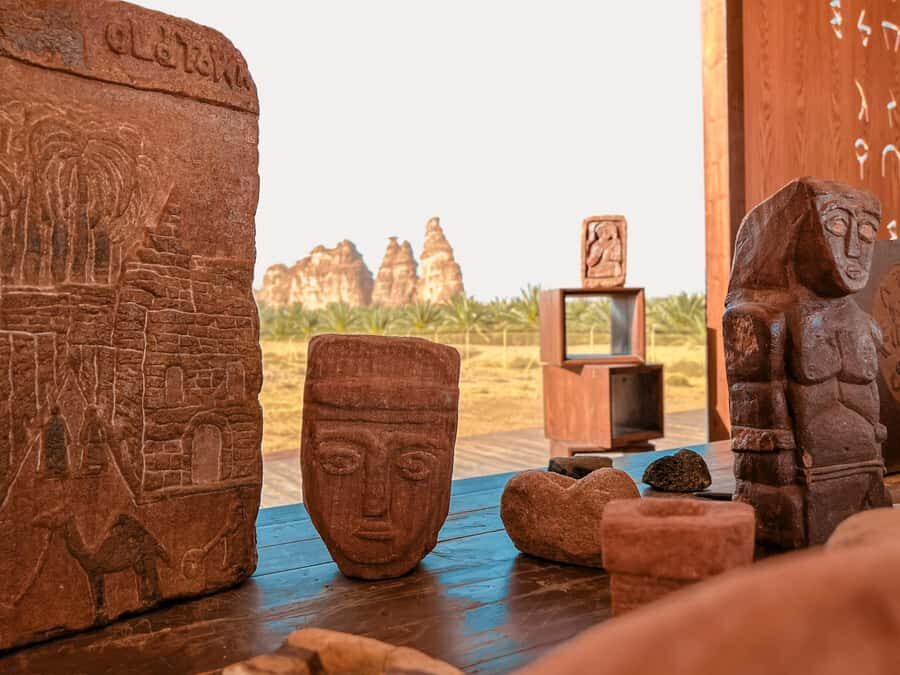
- UNESCO Memory of the World: Jabal Ikmah is recognized for its historically significant carved inscriptions.
- 300+ inscriptions in one mountain area, with the largest concentration of Dadanitic and Lihyanite inscriptions in the world.
- Open-air library feeling: inscriptions and rock art sit right in a desert canyon setting you can walk through and look at.
- Lihyanite and Dadanite context: Dadan is your first big step into the story behind these ancient kingdoms.
- Short and structured: roughly an hour at each major stop, supported by coach transport between them.
Quick reality check: how this 2-hour AlUla loop actually feels
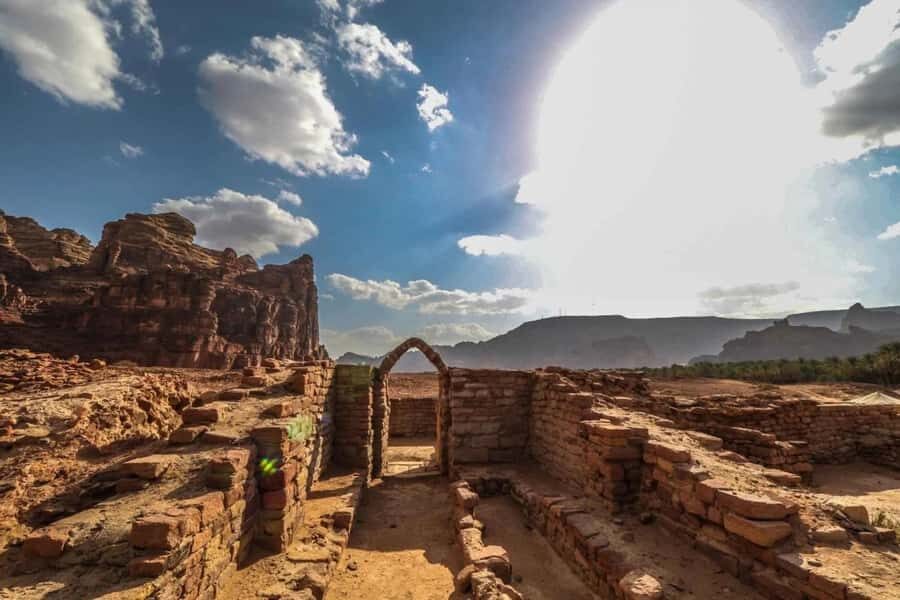
This tour is built for travelers who want a fast, guided taste of AlUla’s archaeology. You start at المنتزه الشتوي (Winter Park), then you ride by coach to the two heritage areas: first Dadan, then Jabal Ikmah, and you return back to Winter Park.
The time structure is simple. You’ll spend about 1 hour at Jabal Ikmah and 1 hour at Dadan, with sightseeing and a walk in the Dadan area. The transfer between them is short—around 10 minutes by drive—so the tour stays sight-focused instead of turning into long bus time.
Because it’s only 2 hours total, the experience rewards preparation. If you want time to linger, take photos calmly, and read carvings slowly, you’ll need to do that smartly during your hour at each site. Think of it as a curated sprint: you’re buying clarity and access, not an all-day archaeological marathon.
You can also read our reviews of more guided tours in Al Ula


Winter Park pickup and coach timing: the part you should not ignore
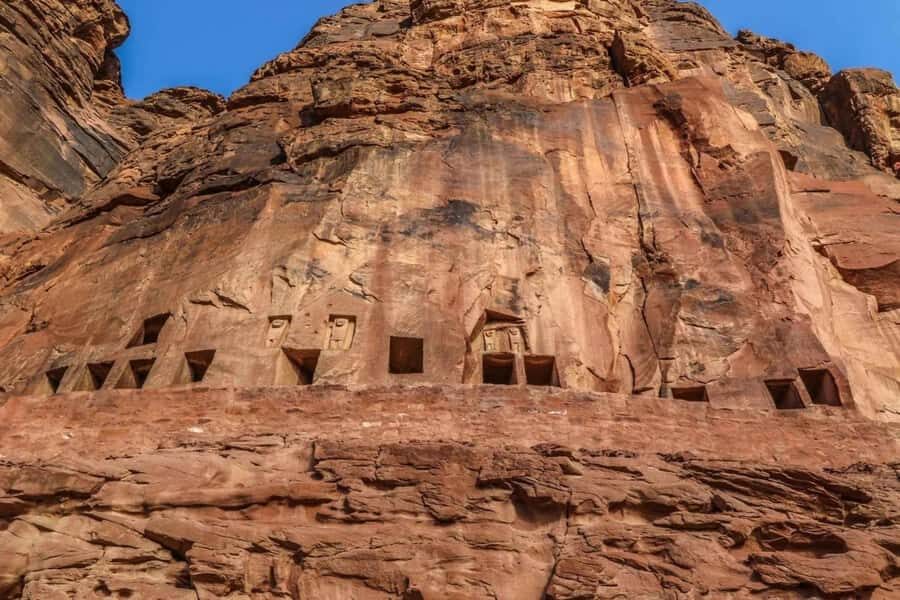
Your meeting point is المنتزه الشتوي. From there, transportation runs between Winter Park, Dadan, then Jabal Ikmah, and back again.
Here’s the practical truth I’d plan around: short tours live or die by punctual timing. I’ve seen real-world reports of departures that didn’t move for a while after the stated cutoff, and of groups getting combined once they arrived on site. When that happens, guides can get stretched thin across languages and group needs, and some people can be bounced back to the bus with less time at the sights.
So here’s my direct advice:
- Arrive early enough that you’re not thinking about the clock.
- If you’re split into groups on arrival, ask clearly where your language group is heading.
- Keep an eye on the headcount before you start moving, so you’re not surprised when the plan changes.
This is the part that can make a great tour feel chaotic. The good news: when everything runs smoothly, the pacing makes sense and the 2 hours feel efficient rather than rushed.
Dadan: walking into the world of the Lihyanites and Dadanites
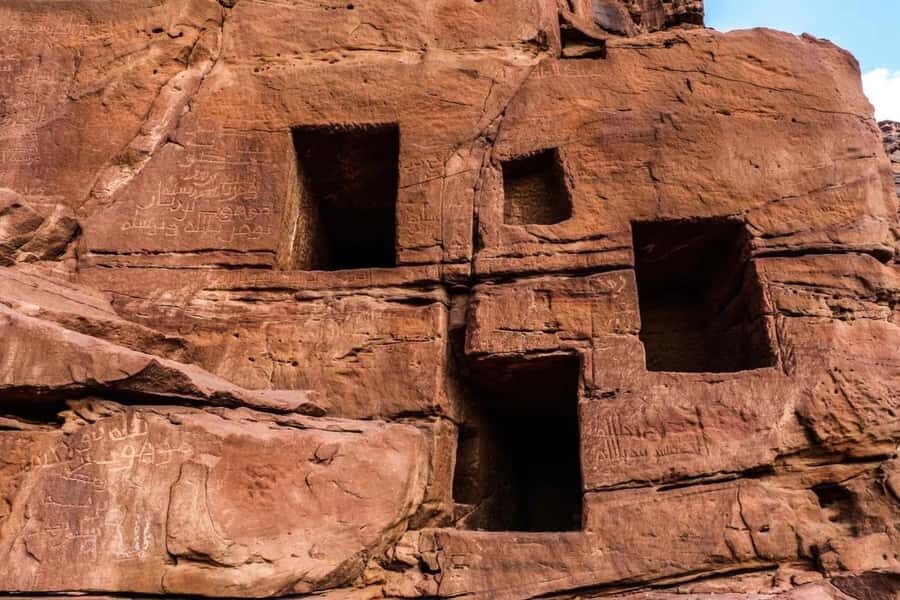
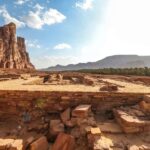
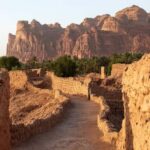
Your first major stop is Dadan, described as the ancient kingdom tied to the Lihyanite and Dadanite civilizations. The appeal here is that you’re not just looking at ruins as scenery. You’re seeing a historical core connected to the people who shaped AlUla.
During your time at Dadan, you’ll do sightseeing and a walk. That hour matters. In a short tour, Dadan is the context piece: it’s where the guide can help you connect the dots between the kingdom names and what you’re about to see at the mountain of inscriptions.
What you’ll likely feel at this stop is a shift from “place” to “story.”
- At Dadan, you’re building the mental map.
- At Jabal Ikmah, you’re reading that story in stone, as it were.
One helpful way to get more out of your hour is to pay attention to how the guide frames the civilizations before you start looking for marks and features. If you understand who these groups were, the carvings at Jabal Ikmah land with more meaning.
Jabal Ikmah: UNESCO Memory of the World and the open-air library effect
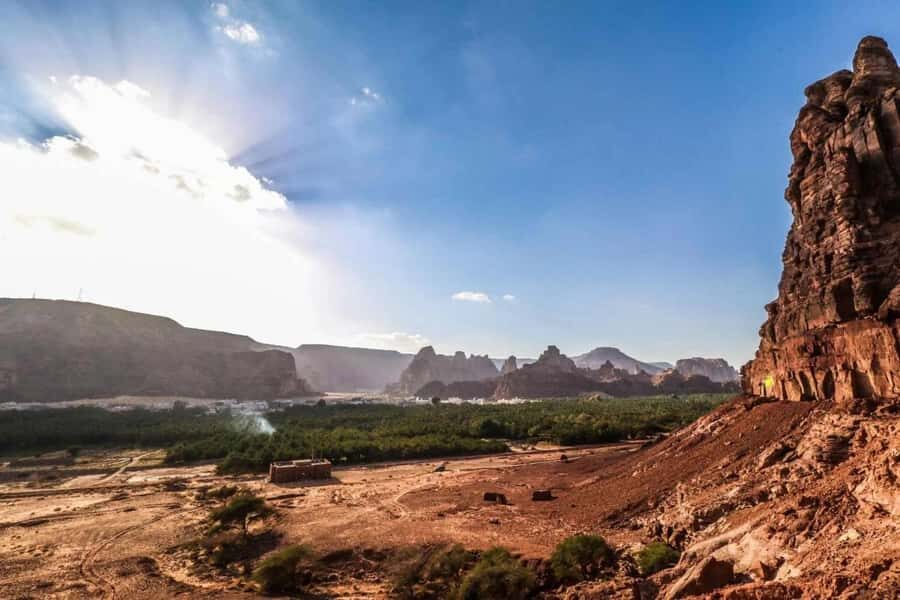
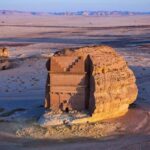
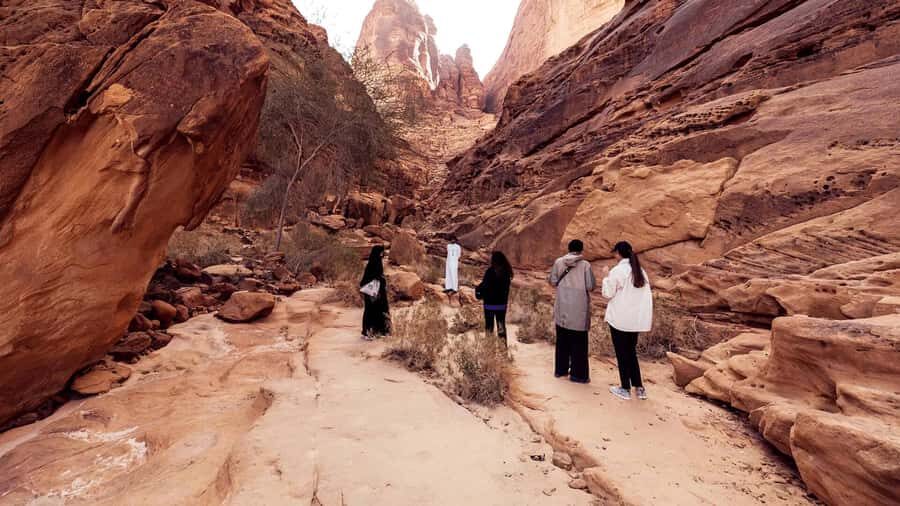
Then you move on to Jabal Ikmah, set in a desert canyon. This is the star stop, and it’s exactly the kind of place that makes you slow down—even when your schedule says you should keep moving.
This mountain is listed under UNESCO’s Memory of the World Register. The key reason is the volume and significance of what’s carved there: more than 300 historically significant inscriptions. The mountain is also described as holding the largest concentration of Dadanitic and Lihyanite inscriptions in the world.
What makes Jabal Ikmah feel special is the mix of markings you’ll be looking for:
- Inscriptions
- Rock art
- Petroglyphs
And they aren’t random. The information you’re given places these works around the 9th century BCE, so you’re not just seeing decorative ancient rock. You’re seeing communication, identity, and record-making behavior frozen into stone.
A quick practical note: canyon settings can feel cooler in the shade, but they can also be dusty and windy. You’ll get more enjoyment if you’re ready for sun and grit—wear layers you can adjust, and keep your eyes on the ground and the cliff surfaces so you don’t miss the smaller carvings.
How the guide can make (or break) the 2 hours
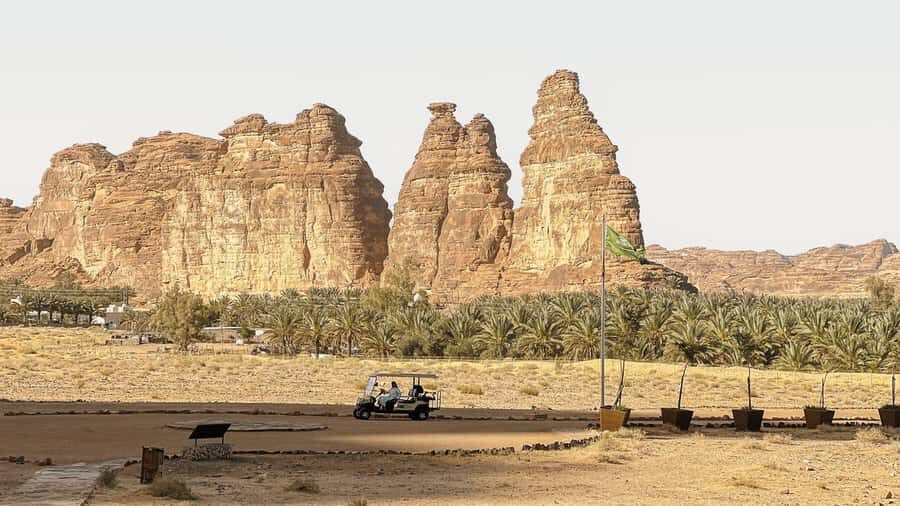
A live guide is included, and language options are Arabic and English. In a tour this short, the guide’s job is crucial. They have to translate the meaning of carved rock into something you can hold in your head before you’re back on the bus.
The strongest signal from the experience is how clear the English delivery can be when the right guide is on the roster. One named guide, Mohamed, was praised for being clear and well spoken in English, and that kind of communication matters here. With inscriptions, you’re not just watching; you’re learning how to see what you’re looking at.
Still, I’d treat language and group flow as a variable. Some real-world reports describe logistics that weren’t handled in English, with onsite local guidance switching to English. I can’t guarantee how your day will run, but you can control one thing: confirm what language you’ll get for the explanation parts, and double-check how your group is arranged at pickup.
If you’re traveling with friends who want English commentary, don’t assume it will automatically match every step of the day. Ask early so you don’t lose time trying to figure it out on-site.

Price and value: what $49 buys you in AlUla
The price is $49 per person, for a 2-hour guided experience. Entrance fees are included, and personal expenses are not included.
This matters for value. On many short tours, the “headline price” can feel misleading if entrance fees are extra. Here, you’re covering the entry costs as part of the bundle, which helps you avoid surprise add-ons once you reach the sites.
You’re also getting transportation from Winter Park to Dadan and then Jabal Ikmah and back. Even when the drive between sites is short, the tour removes the planning pressure—no figuring out routes or coordinating separate tickets for two archaeological stops in one afternoon.
At $49, the deal is essentially:
- guided interpretation for the two sites
- entrance fees
- coach transport between them
So it’s a strong value if you want the guided context and don’t want to piece it together yourself. If you already know the inscriptions story and you prefer a self-guided pace, you might get more time from a longer tour or a different format. But for a compact overview, the value is easy to justify.
What to do during your hour at each site (so you don’t miss the point)
Because each major stop is about one hour, you’ll enjoy this tour more if you adopt a simple “read and relate” approach.
At Dadan, focus on understanding the civilizations and the setting before you start scanning for features. Ask your guide to frame what you’re seeing in plain terms, especially the connection between the Lihyanites and Dadanites.
At Jabal Ikmah, the goal is to identify the categories you’re learning about:
- inscriptions as written record
- rock art as visual symbols
- petroglyphs as carved imagery
You won’t be doing a slow academic study in 60 minutes. Instead, treat it like learning the alphabet fast. Once you recognize what kind of mark you’re looking at, your brain starts organizing the mountain into a readable story.
If your tour day starts late or groups get combined, don’t let frustration steal your attention. Prioritize the core elements—inscriptions and how they’re dated to the 9th century BCE—because that’s the heart of why Jabal Ikmah is internationally recognized.
Who this guided tour suits best
This experience is a good match for:
- You have limited time in AlUla and want a guided overview
- You’re interested in ancient civilizations and want context, not just photos
- You like seeing UNESCO-recognized heritage and understanding why it matters
- You want a structured 2-hour loop that uses transport efficiently
It’s less ideal if:
- You need a lot of downtime or long wandering time
- You hate any chance of schedule friction in short tours
- You’re expecting a museum-like, slow reading pace for inscriptions
If you like quick clarity and you’re okay with a focused schedule, you’ll likely enjoy it.
Should you book AlUla: Dadan and Jabal Ikmah?
I’d book this tour if your top priority is a guided, time-efficient look at two big archaeological anchors in AlUla—especially Jabal Ikmah, with its UNESCO Memory of the World status and the concentration of Dadanitic and Lihyanite inscriptions.
I would hesitate only if you strongly dislike logistical uncertainty, because the compressed schedule leaves little buffer if pickup timing or group organization slips. Your best move is simple: arrive early at المنتزه الشتوي, confirm your language experience, and give yourself permission to enjoy it as a sprint.
If you do that, you should come away with a real sense of how the Lihyanites and Dadanites shaped AlUla, and why this mountain is treated like an open-air archive.
FAQ
Where does the tour start and end?
The meeting point is المنتزه الشتوي (Winter Park), and the tour returns to المنتزه الشتوي after visiting the sites.
How long is the tour?
The duration is 2 hours.
How much does the tour cost?
The price is $49 per person.
What sites are visited?
You visit Jabal Ikmah and Dadan.
How much time is spent at each site?
The tour includes 1 hour at Jabal Ikmah and 1 hour at Dadan (with sightseeing and a walk).
What is included in the price?
The tour includes entrance fees.
What is not included?
Personal expenses are not included.
Is there a live tour guide?
Yes. The tour includes a live tour guide.
What languages are available?
The live tour guide is available in Arabic and English.
Is free cancellation available?
Yes. Free cancellation is available up to 24 hours in advance for a full refund.
Is there a reserve now and pay later option?
Yes. You can reserve now & pay later.