REVIEW · AL ULA
AlUla: Hegra, Dadan and Ikmah Highlights Tour
Book on GetYourGuide →Operated by Saudi Arabia Tours Dot Net · Bookable on GetYourGuide
Carved tombs, inscriptions, and Elephant Rock. This AlUla highlights tour strings together the big names—Hegra, Dadan, and Jabal Ikmah—so you spend your limited time seeing what makes AlUla feel uniquely archaeological.
I especially like the pairing of Hegra (Madain Saleh) with the Nabatean-world setting it comes from, and then shifting gears to Jabal Ikmah, an open-air “library” of inscriptions in multiple ancient scripts. The one potential drawback: it’s not positioned as fully private door-to-door sightseeing the whole time, and the on-site movement can involve joining scheduled group logistics once you reach the visitor-area hubs.
In This Review
- Key takeaways before you go
- Hegra (Madain Saleh): the Nabateans, but with their own swagger
- Elephant Rock: a one-stop silhouette hunt
- Dadan: caravan stop energy, not just scenery
- Jabal Ikmah: the open-air inscription “library” you came for
- Shared small-group logistics: how to avoid disappointment
- Timing and pacing: what 6 hours can (and can’t) do
- Value check: where $100 makes sense and where it might not
- Who should book this AlUla highlights tour
- Should you book this tour?
- FAQ
- How long is the AlUla highlights tour?
- Where is pickup for this tour?
- Which sites are included?
- Are entrance fees included?
- What languages is the live guide available in?
- Is this tour private?
- Is the tour wheelchair accessible?
- What’s included in the price?
Key takeaways before you go
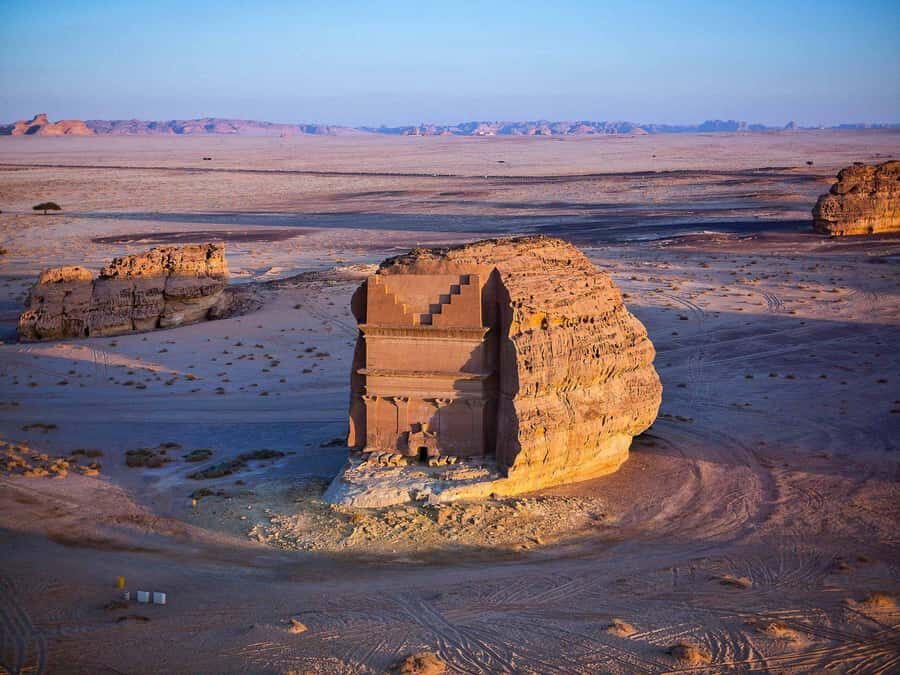
- World Heritage Hegra, first in Saudi: You’ll visit the site widely seen as the Kingdom’s major Nabatean-rock-carving moment.
- Elephant Rock is short but iconic: It’s a focused photo stop at an instantly recognizable landmark.
- Jabal Ikmah is the inscription showpiece: Thousands of carvings, including texts tied to the early Islamic era.
- Time is real-world limited: 3 hours at Hegra, then 1 hour each for Dadan and Ikmah means you’ll need to choose what you linger on.
- Small-group, shared on-site flow: You’ll likely share parts of the experience with a local guide and other people.
Hegra (Madain Saleh): the Nabateans, but with their own swagger
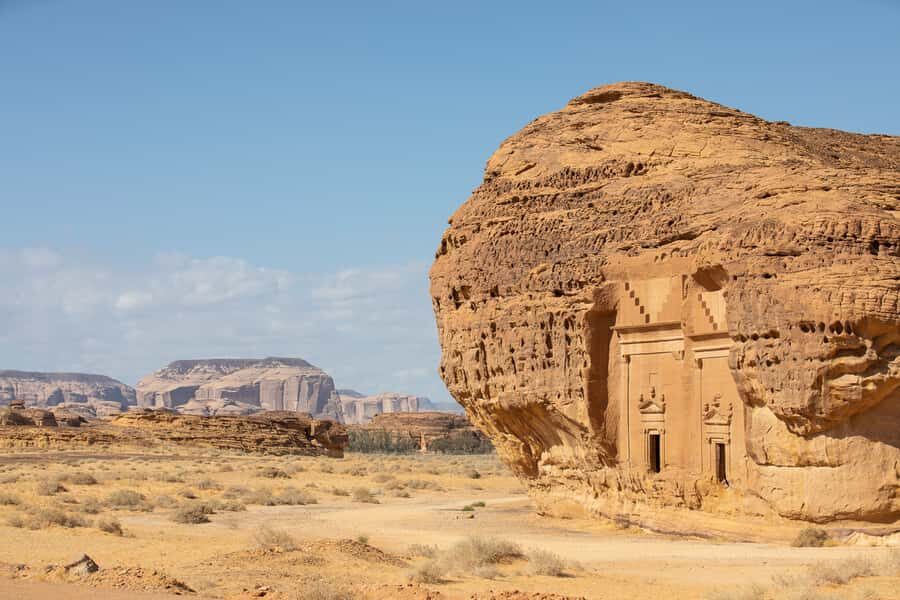
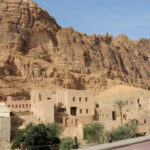
Hegra—also known as Madain Saleh or Al-Ḥijr—is why so many people put AlUla on their map in the first place. This is a UNESCO World Heritage site and is noted as the first World Heritage property inscribed in Saudi Arabia. More than that, Hegra matters because it gives you a clear sense of the Nabatean kingdom south of Petra: it’s described as their largest conserved site in that region and their southernmost and largest settlement after Petra.
During the guided portion (3 hours), I’d expect you to get the basics in a way that actually helps you look. You’re not just wandering among rock-cut facades—you’re learning how these tombs and inscriptions fit into a living place built for travelers, traders, and power. Hegra’s tomb-lined valleys can feel repetitive at first glance, so a good guide’s job is to point out how the carvings, layout, and meanings connect.
Practical note: Hegra is spread enough that your feet do some work. If you’re the type who likes to read every carved detail, 3 hours can feel just right. If you’re a “quick scan then photos” person, it may feel like time could be tighter. Either way, I’d treat this stop as the anchor of the whole day: if the rest of the tour is a book cover, Hegra is the first chapter.
You can also read our reviews of more tours and experiences in Al Ula.

Elephant Rock: a one-stop silhouette hunt
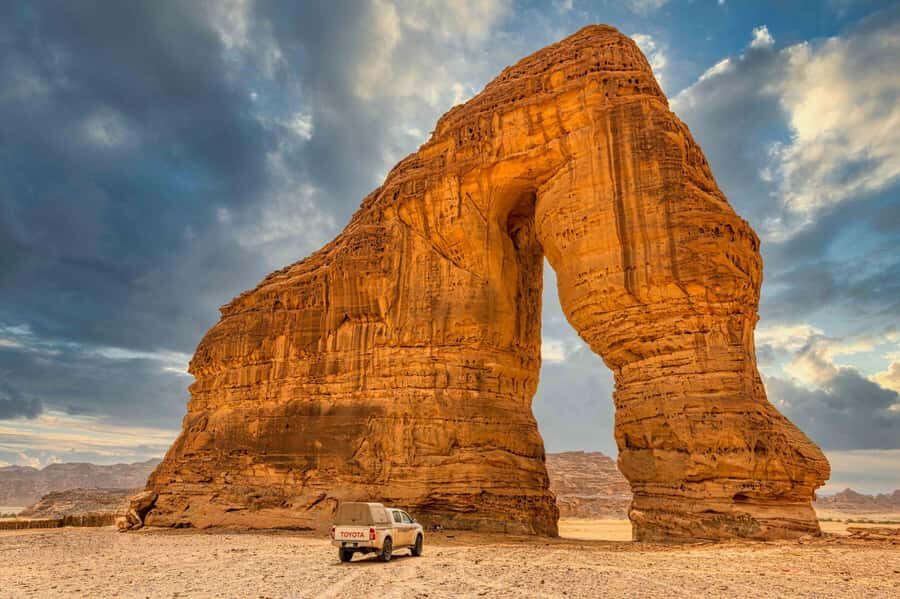
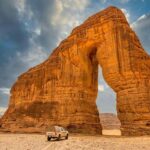
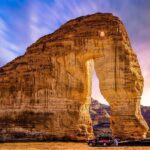
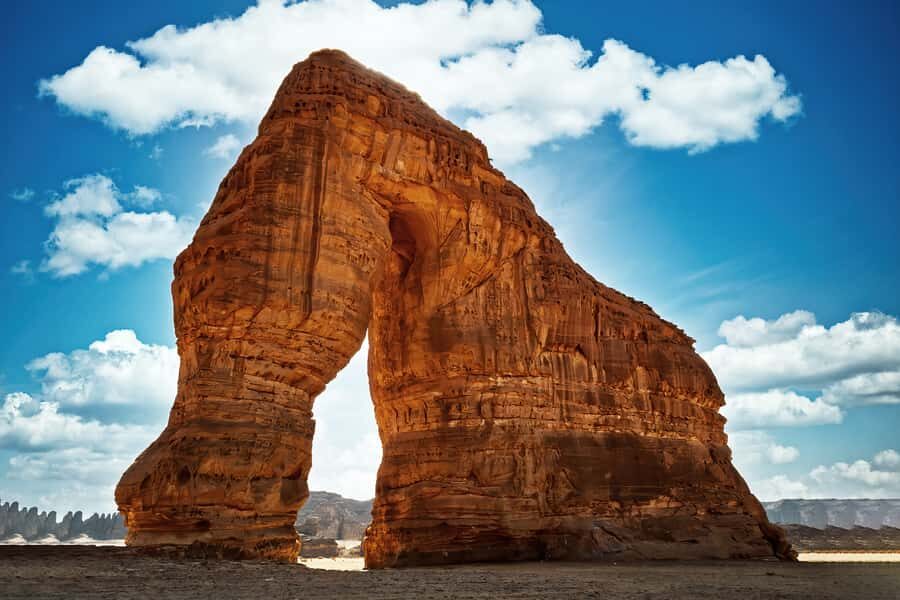
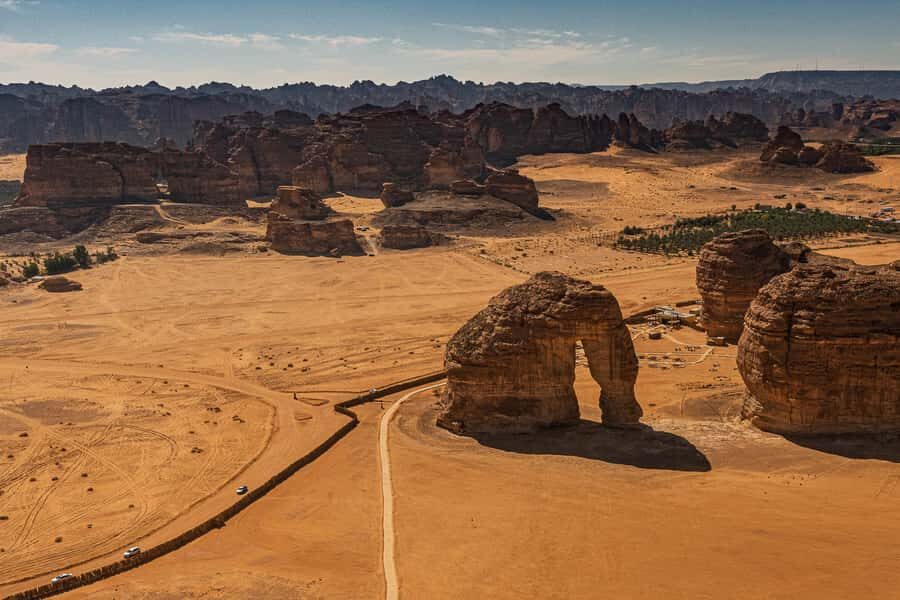
Elephant Rock is one of AlUla’s most famous geomorphological landmarks. It’s named for a rock formation that resembles an elephant, with the trunk portion reaching toward the ground. In a tour that totals 6 hours, Elephant Rock gets 1 hour, and that’s exactly the kind of allocation that keeps expectations realistic.
Here’s how I’d play it: use that time for photos from a few angles and let the shape do the talking. This isn’t a long museum visit where you need to digest information in slow motion. It’s more like a visual checkpoint—see it, frame it, then move on while the light is still doing something nice to the stone.
If you love iconic photo ops, you’ll probably enjoy this stop more than you think. If you prefer deeper context at every site, you may wish it lasted longer. The tradeoff is that Elephant Rock is easy to fit in without cutting into the inscription-heavy moments later.
Dadan: caravan stop energy, not just scenery
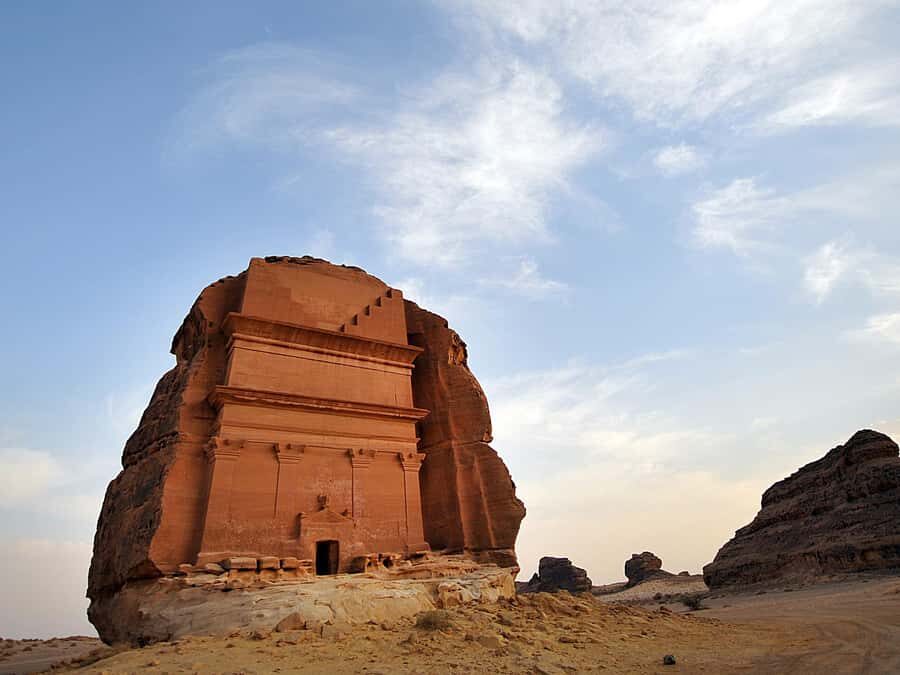
After Hegra, the tour shifts to Dadan (with a 1-hour guided visit). Dadan is described as a caravan way station, which matters because it frames the setting as a crossroads rather than a remote backwater. In other words, you’re seeing evidence of movement—people passing through, stopping, trading, and leaving traces.
Caravan sites tend to change the way you interpret ruins. Instead of asking only what looks impressive, you start asking what made this place practical: access, routes, the ability to gather supplies, and a location that fits the flow of travel. Even in an hour, if your guide explains the caravan context clearly, Dadan can feel like a link in a chain that stretches back through the region.
The main consideration here is time. One hour is enough to get the story and see the core elements, but it may not be enough if you want to pause deeply over smaller carvings or if you’re especially inscription-focused (save the marathon reading for Jabal Ikmah).
Jabal Ikmah: the open-air inscription “library” you came for
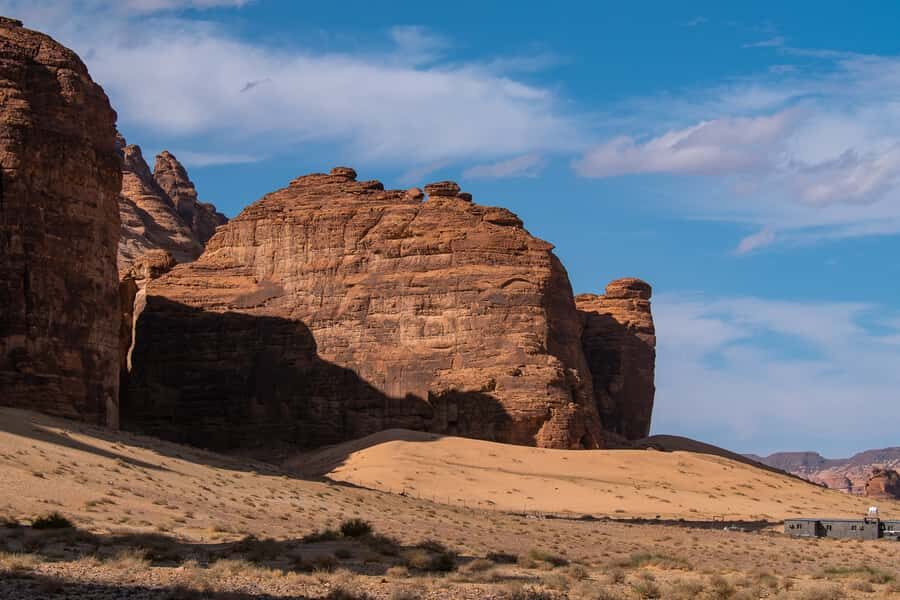
If Hegra is the rock-cut tomb scene, Jabal Ikmah is the “read it with your eyes” scene.
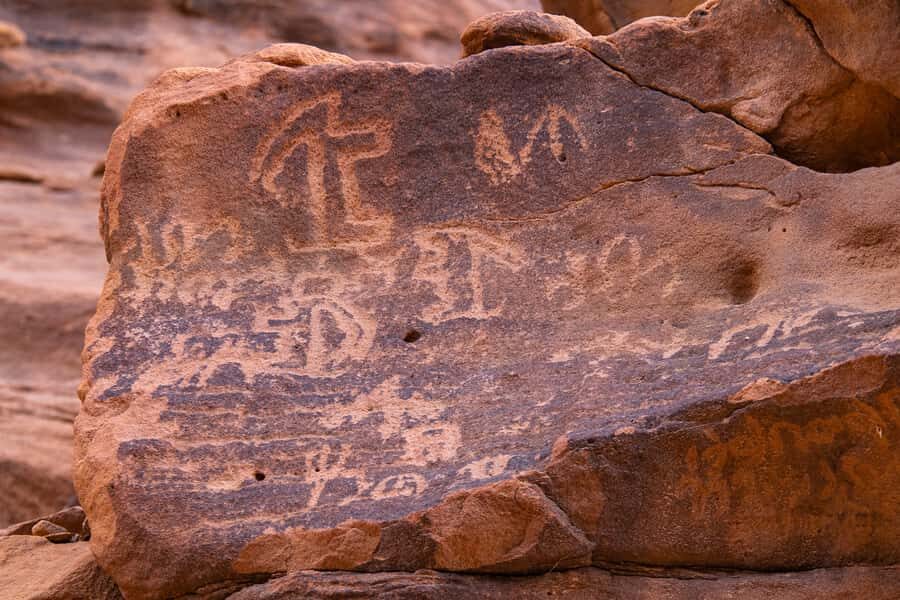
Jabal Ikmah is described as an open-air library across AlUla’s valley, where you find thousands of inscriptions. These include languages and scripts such as Aramaic, Dadanitic, Thamudic, Minaic, and Nabataean. It also highlights one of the oldest inscriptions of the Islamic era dating to 24 AH (644 CE). The point isn’t just the age—it’s the mix. Different scripts and language families layered across the cliffs tells you AlUla wasn’t one culture sitting in one place forever. It was a meeting point over centuries.
The information shared around the site also connects Jabal Ikmah to the wider inscription geography of AlUla. You’ll hear that thousands of pre-Arabic inscriptions across multiple sites make AlUla important for studying the Arabic language’s earlier forms. The tour context includes that nearby mountains like AlAqra’a have hundreds of early Arabic inscriptions and that Naqsh Zuhayr has one of the oldest Islamic-era inscriptions (24 AH / 644 CE). Jabal Ikmah is called out as the place with the highest concentration and the most varied inscriptions.
In your 1-hour guided window, I’d focus on what the guide points out first, then pick one small section of the cliff to study longer on your own. If you try to read everything, you’ll burn time and get frustrated. If you pick a few areas and let the script variety sink in, the hour can feel surprisingly full.
Shared small-group logistics: how to avoid disappointment
This is a highlights tour with live guidance in Arabic and English. It’s also described as shared with a local guide and a small local group. On paper that sounds friendly and efficient.
In practice, the big thing to understand is how the day flows between sites and visitor areas. The experience includes hotel transfers by modern air-conditioned van and uses a tour leader/driver. But once you reach the visitor-center system for major sites, you may join on-site transport that’s shared with other people. That doesn’t make the tour pointless—it just means you shouldn’t expect a totally private, you-and-the-guide-only experience for every minute.
So here’s my advice for managing expectations: treat it as a guided highlights package that handles a lot of the travel friction, not as a guarantee of fully private access at every stage. If you want maximum flexibility to linger in one place and skip another, you’ll have to rely on how your guide runs the group time.

Timing and pacing: what 6 hours can (and can’t) do
This tour runs for 6 hours total. The time allocation is straightforward: 3 hours at Hegra, then 1 hour each for Dadan and Jabal Ikmah, plus 1 hour for Elephant Rock.
That pacing is a strength and a limitation.
- It’s a strength because it prevents the classic AlUla problem: spending too long on one site and leaving the others feeling like hurried bonus stops.
- It’s a limitation because Hegra is the heavy lift, and Dadan/Ikmah are content-rich. If you’re the type who loves inscriptions and wants longer, you might feel the 1-hour slots are on the short side.
If you’re trying to make decisions for your own travel style, I’d ask yourself this: do you want coverage across multiple “must-see” AlUla landmarks in one go, or do you want a deeper, slower reading of fewer sites? This one is clearly in the first category.
Value check: where $100 makes sense and where it might not
The listed price is $100 per person, and the tour includes entrance fees, modern air-conditioned van transfers from your hotel in AlUla, and service charges and taxes. It also includes a live tour leader/driver and guided time at Hegra, Dadan, and Jabal Ikmah.
So where do you get good value?
- When you want someone to coordinate your day, handle entrances, and explain what you’re looking at.
- When you want to hit the major points—Hegra’s UNESCO site, Elephant Rock, and the inscription concentration at Jabal Ikmah—without doing the logistics yourself.
Where value can feel weaker?
- If you were expecting a fully private experience the entire way, the shared on-site format can make the price feel less “all-in-one” than you imagined.
- If you’re highly cost-sensitive and you’re comfortable arranging entries and transfers on your own, you might find you can do the core visits with less spending.
Bottom line: at this price, I see the tour as worth it for convenience and guidance. If you already plan to DIY parts of AlUla, do the math carefully against the cost of entrance fees and local transfers.
Who should book this AlUla highlights tour
This tour fits best if you:
- want a guided overview of Hegra, Dadan, and Jabal Ikmah in one half-day
- like a mix of tomb architecture and inscription-focused stops
- prefer hotel pickup and air-conditioned transfers over public logistics
It may be less ideal if you:
- need every moment to be private and fully custom
- want lots of time to read inscriptions without time pressure
- expect Elephant Rock to be more than a photo stop
If you love language history and inscriptions, you’ll probably gravitate toward Jabal Ikmah and enjoy the way the tour frames what you’re seeing. If you prefer monuments and big “wow” visuals, Hegra and Elephant Rock are your strongest anchors.
Should you book this tour?
I’d book it if your goal is simple: cover the headline AlUla sites with guidance and not burn your day figuring out transport between hubs. With Hegra taking the lion’s share of time and Jabal Ikmah delivering the inscription payoff, the tour’s structure makes sense for first-time visitors.
I’d think twice if you’re expecting a strictly private, you-only tour experience end to end. If you want maximum time for inscriptions at Dadan and Ikmah, this schedule can feel a bit tight, because you only get 1 hour at each.
FAQ
How long is the AlUla highlights tour?
It lasts 6 hours.
Where is pickup for this tour?
Pickup is from AlUla.
Which sites are included?
You visit Hegra (Madain Saleh), Dadan, Jabal Ikmah, and you also stop at Elephant Rock for photos.
Are entrance fees included?
Yes, entrance fees are included.
What languages is the live guide available in?
The live tour guide is available in Arabic and English.
Is this tour private?
No. It is shared with a local tour guide and a small local group.
Is the tour wheelchair accessible?
Yes, it is wheelchair accessible.
What’s included in the price?
The price includes all transfers by modern air-conditioned van from your hotel in AlUla, a tour leader/driver, entrance fees, service charges, and taxes.