REVIEW · MEDINA
Madinah Culture & History Tour – Led by Local Guide
Book on GetYourGuide →Operated by Medina tours with Locals · Bookable on GetYourGuide
Medina history feels personal on this tour. You’re not just checking boxes here; you’re moving through key spiritual and historical stops with a local licensed guide who explains what to notice and why it matters.
I especially love the way the tour is paced: short guided stops plus real time to look around and pray. And I really like the practical comfort details—hotel pickup and an air-conditioned car make a religious day feel easy, not exhausting.
One thing to plan for: mosque visits come with strict dress and space rules, including gender-separated areas. If you’re not set with a hijab/abaya, you’ll want to handle that before you arrive.
In This Review
- Key things I’d focus on before you go
- A private Medina tour that actually feels like Medina
- What $136 gets you for up to 3 people
- How the day runs: timing, walking, and a workable pace
- Quba Mosque: why the first mosque still feels calm
- Masjid al-Dira’ (Shield Mosque) and Uhud: history tied to place
- Wadi Al-Aqiq: a blessed valley break from the crowd
- Masjid Al-Qiblatain: the prayer-direction turning point
- The farm stop at Al-Mirbad / Reef Al Bustan: tea, sweets, and everyday Medina
- Ghars Well (or Bir Al-Faqeer): water, memory, and a final reflective stop
- Dress code and mosque etiquette: plan ahead, save stress
- Guide quality: why the stories matter as much as the stops
- Who this tour suits best
- Should you book it? My straight answer
- FAQ
- How long is the Medina Culture & History Tour?
- What’s the price, and how big is the group?
- Is hotel pickup included?
- What sites are included on the tour?
- What’s special about Quba Mosque?
- Is transportation included?
- What language is the guide?
- What food or drinks are included?
- Do I need to wear hijab and abaya?
- Can I cancel for a refund?
Key things I’d focus on before you go
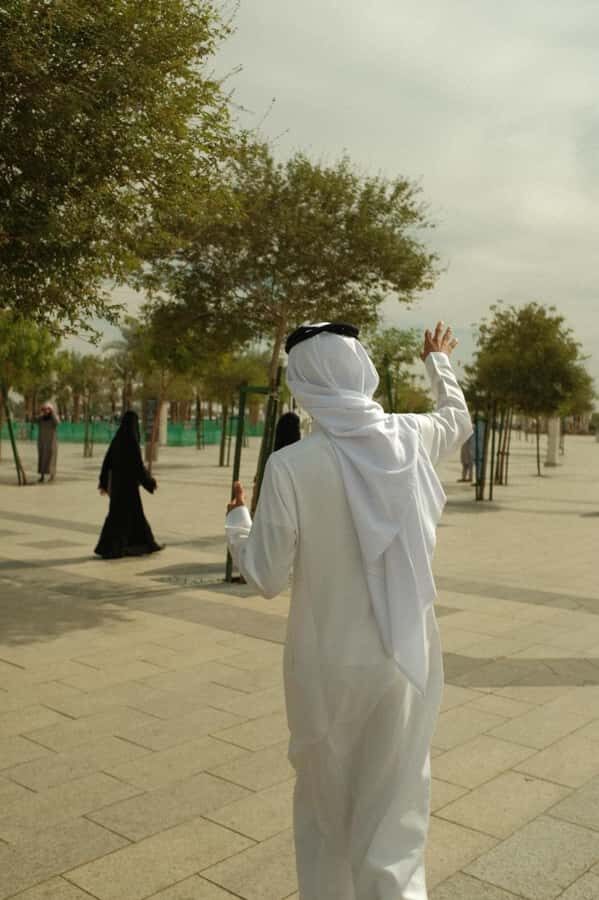
- Local, Madinah-born guides: names like Ahmad Aloufi, Nasser, and Nasir show up in the guide roster, and that local perspective comes through.
- A tight circuit of major sites: Quba, Uhud (Mount of Archers), Wadi Al-Aqiq, and Al-Qiblatain are all in one smooth route.
- Guided history where it counts: you get context tied to early Islam events, not just dates and plaques.
- A rare farm-and-tea pause: you’ll slow down at a traditional farm for tea, sweets, and local snacks.
- Spiritual stops beyond the big mosques: wells like Ghars Well (or the updated Bir Al-Faqeer on the morning version) add another layer.
A private Medina tour that actually feels like Medina
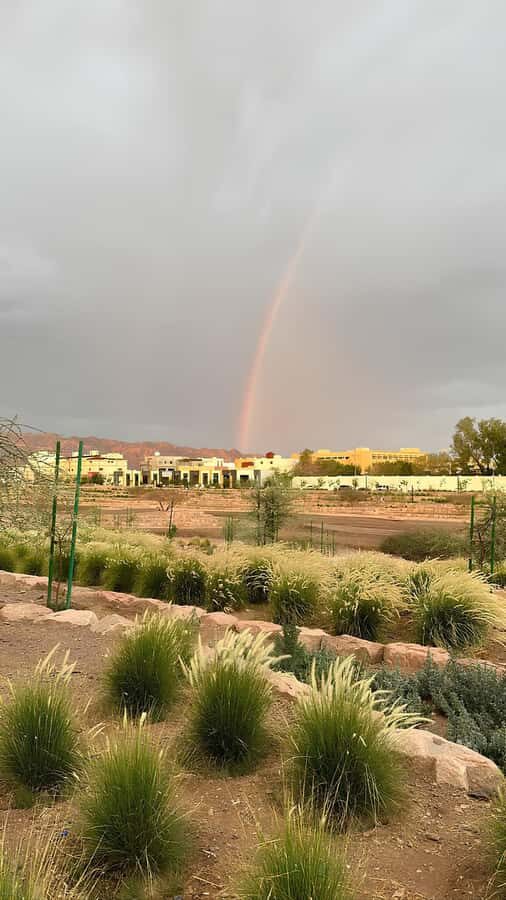
This Medina Culture & History Tour is built for one simple goal: help you understand the city’s most meaningful places in a way that feels respectful and clear. It runs about 4 hours and is priced for a private group up to 3 people, so you’re not stuck listening to a loud broadcast or fighting for photo angles.
What makes it work is the mix of sites. You get major mosques tied to the Prophet’s ﷺ life, battlefield memory at Uhud, a quiet blessed valley moment, and even a rural stop at a farm. The flow matters because Medina is not only monuments—it’s also stories you connect by moving through specific locations.
And yes, it’s private. That small group size means your guide can slow down for questions, explain prayer-area instructions before you enter, and keep everyone comfortable.
You can also read our reviews of more tours and experiences in Medina.

What $136 gets you for up to 3 people
At $136 per group up to 3, the math only makes sense if you’re actually getting a guide-and-vehicle day, not just a driver who drops you off.
Here’s what’s included that turns it into real value:
- Pickup from your accommodation and return to the same place
- Clean air-conditioned transportation
- Licensed local guide (English and Arabic)
- Bottled water
- Parking fees
- Tasting dates
- Farm stop with tea and local sweets/snacks (and a market-style shopping moment at the farm)
The tour feels like a “guided circuit” rather than a checklist. That’s important in Medina, where some sites have rules you’ll miss if you’re on your own.
How the day runs: timing, walking, and a workable pace
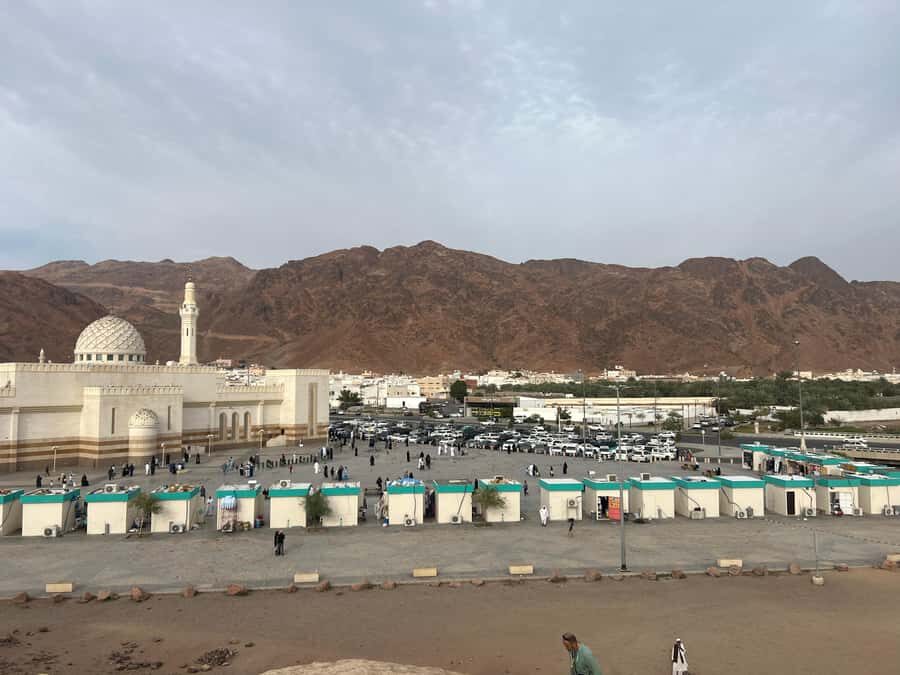
The itinerary is designed for a compact day. Expect a series of guided stops plus short walks—especially around Uhud and Mount of Archers. The time on the ground varies by site, but overall it stays tight enough for 4 hours without turning into a sprint.
A practical tip: wear footwear you can handle on uneven ground at Uhud/Mount of Archers. Even if the walk segment isn’t long, the terrain is part of why the location feels real.
Quba Mosque: why the first mosque still feels calm
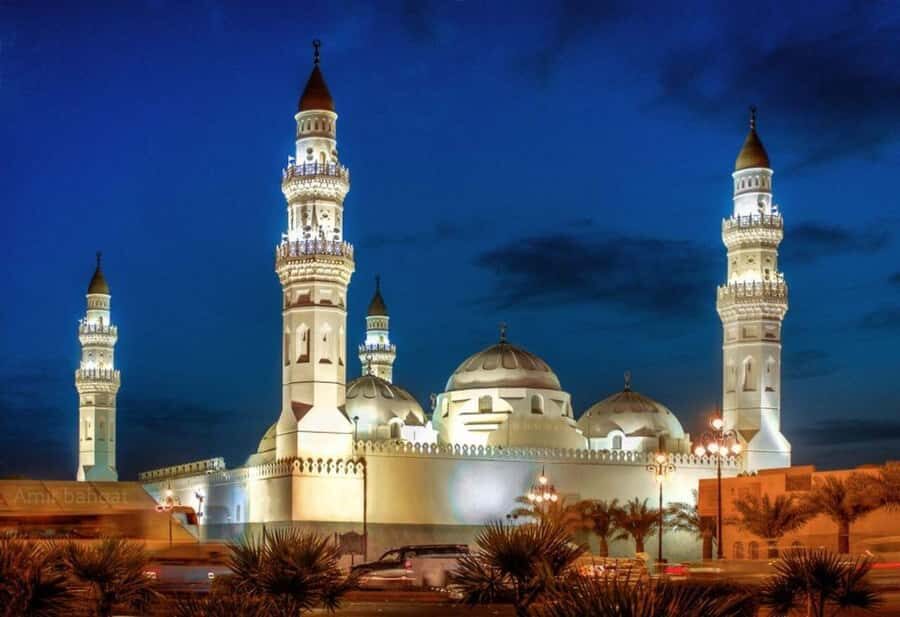
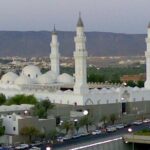
Your first major stop is Quba Mosque (Masjid Quba), widely described as the first mosque built in Islam. The guide’s job here is to help you notice two things at once: the setting’s calm and the spiritual idea behind repeated connection to the place.
What I like about a guided visit at Quba is that it’s not only about architecture or photos. You’ll hear the meaning of why the Prophet ﷺ visited and prayed there, and that turns the visit into something closer to reflection than sightseeing.
Practical considerations:
- You’ll likely have time to move through the space respectfully and observe how people worship.
- Dress requirements matter right away, so be ready when you arrive.
Masjid al-Dira’ (Shield Mosque) and Uhud: history tied to place
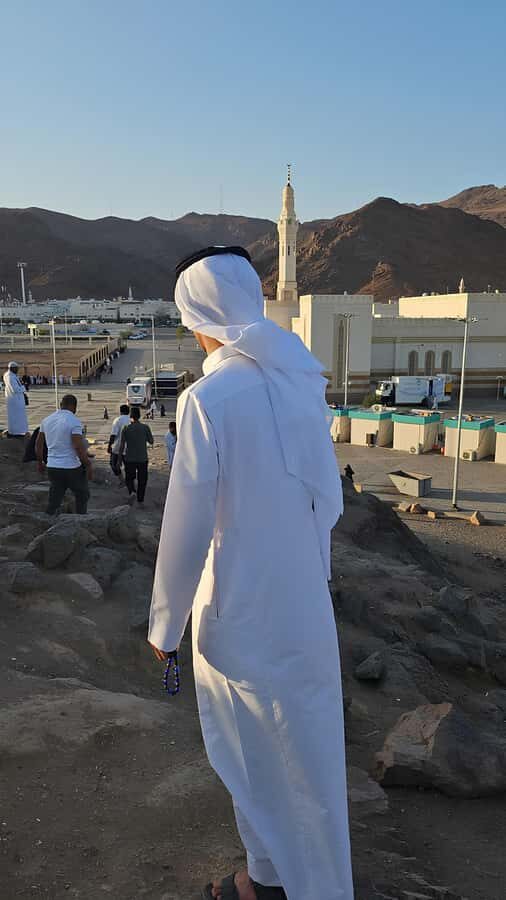
From Quba, the route continues to Masjid al-Dira’ (Shield Mosque), a site linked to the events of the Battle of Uhud. This stop is short but meaningful, because it anchors you before you reach the battlefield area.
Then comes Uhud and the Mount of Archers (Jabal al-Rumah) area. This is where the tour becomes emotional in a good way. The guide’s stories focus on faith, discipline, and lessons learned—so the site doesn’t feel like a distant history lecture.
What you’ll want to do here is listen for the “why.” It’s easy to walk among stones and not feel the connection. A good local guide helps you understand what happened where, and why people remember it so strongly.
One real-world advantage of private guiding: your guide can shape the pace. Some guests want more time at viewpoints; others want a cleaner route for prayer timing. A private group makes that easier.
You can also read our reviews of more historical tours in Medina
Wadi Al-Aqiq: a blessed valley break from the crowd
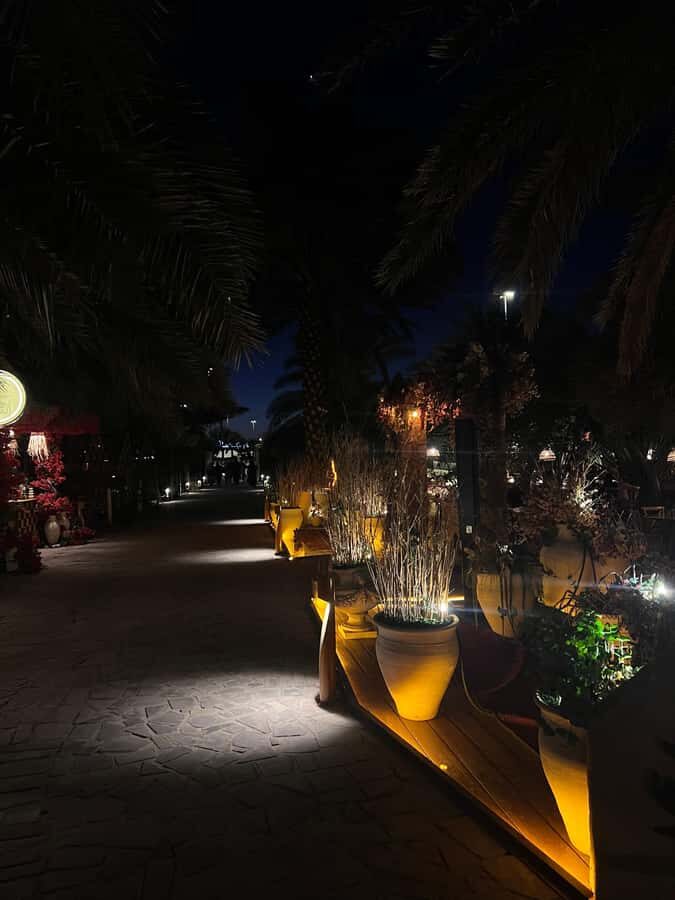
Next is Wadi al-‘Aqiq, described as a blessed valley in Islamic traditions. This stop acts like a reset between heavier historical sites and the major mosque of Al-Qiblatain.
Instead of rushing, you’ll typically get a photo stop and some guided context, plus a chance to breathe. The value here is simple: Medina can feel intense because of the significance everywhere. A quiet valley moment gives your mind somewhere to land.
If you’re the type who likes learning through pauses—not only through explanations—this is a highlight.
Masjid Al-Qiblatain: the prayer-direction turning point
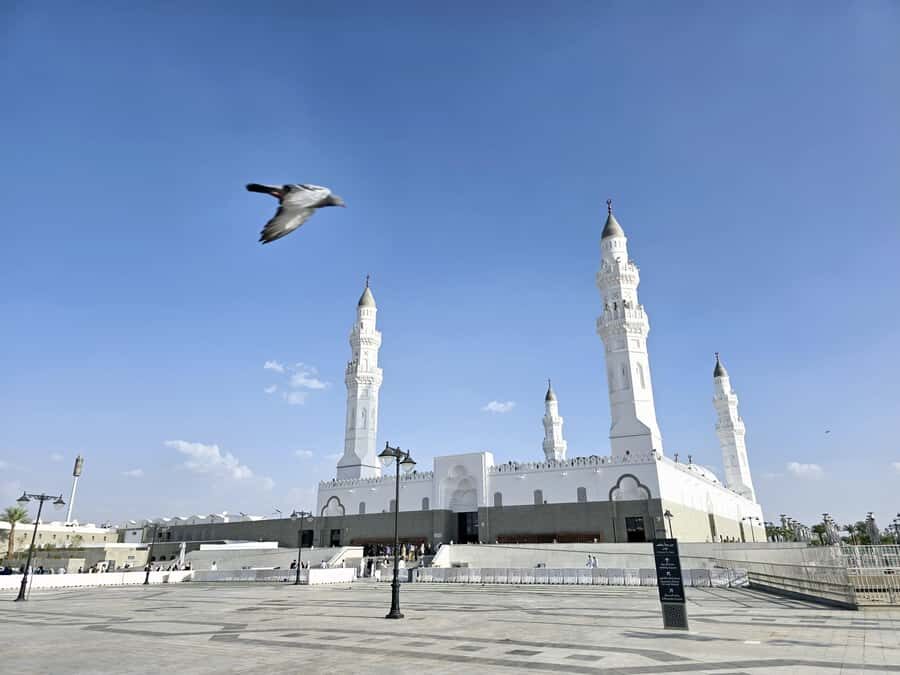
At Masjid Al-Qiblatain (Mosque of the Two Qiblas), the story turns from “where did events happen” to “what changed in worship.” This is the mosque where the direction of prayer shifted from Jerusalem to Mecca during congregational prayer, marking a major turning point in early Islamic history.
A guided stop helps because you’re standing in a place where the details matter. Without context, the visit can feel like another beautiful mosque. With context, it feels like a moment of transition—understood in the setting where the community experienced it.
You’ll also get free time and time for walking around the site area. That’s useful because it gives you space to process what you just heard.
The farm stop at Al-Mirbad / Reef Al Bustan: tea, sweets, and everyday Medina
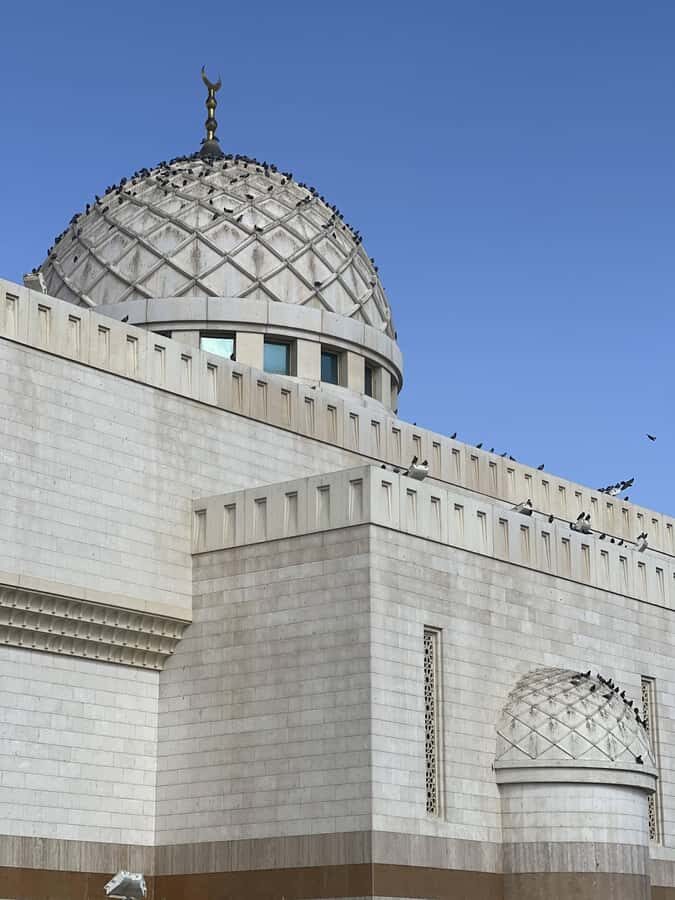
Then you shift gears. The tour includes a traditional farm stop—often presented as Al-Mirbad Farm—where you’ll enjoy tea and local sweets/snacks. You may also get a chance to shop or browse a local food market style area, depending on the day.
This is a surprisingly important part of the tour. Religious and historical sites can fill your head all day. A farm visit brings you back to daily life: hospitality, flavors, and the kind of rural calm Medina also has.
One note you should know: the morning version can be updated. The tour notes that instead of the older locations Bir Gharas and Al-Murabbad Farm, the morning tour now includes Bir Al-Faqeer and Reef Al Bustan Farm. So if you’re choosing a morning slot, don’t be surprised if the farm name changes while the spirit of the stop stays similar.
Ghars Well (or Bir Al-Faqeer): water, memory, and a final reflective stop
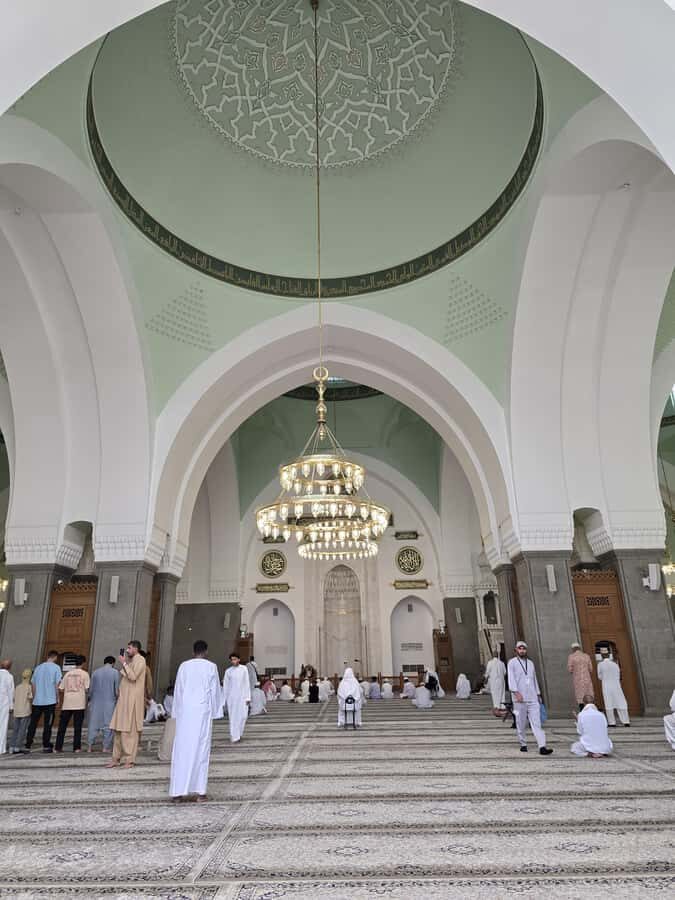
Your concluding stop is a historic well connected to the Prophet ﷺ. In the standard flow, it’s Gharas Well, and the notes confirm that the morning tour update swaps this for Bir Al-Faqeer.
Either way, this final stop gives you something different from mosques: a place tied to daily needs and early community life. Even if your main interest is theology and battle history, a well stop adds a human scale. It’s one more way to connect the stories to ordinary reality.
You’ll typically get a photo stop and guided visit, with some walking around the area to take it in.
Dress code and mosque etiquette: plan ahead, save stress
This tour is respectful and religiously minded, but that also means you need to follow the basics.
- Bring a hijab and an abaya (or plan to have them with you)
- Expect gender-separated areas in mosques
- Follow your guide’s instructions on where to go and what to do
In practice, guides like Ahmad Aloufi are praised for giving clear direction before you enter sacred spaces. That’s a big deal. It prevents awkward moments and keeps the experience focused on learning rather than logistics.
If you’ve forgotten something at the last minute, it’s worth asking your guide for help before you step inside—at least one guest has described the guide arranging an abaya purchase so they could enter the mosques comfortably.
Guide quality: why the stories matter as much as the stops
This tour’s star is the local guide. You’ll see names like Ahmad, Nasser, and Nasir show up, and the consistent theme is how they explain Medina with sensitivity.
The best-guiding style shows up in small ways:
- Clear instructions so you don’t feel lost in mosque rules
- Enough time at each stop to actually look, not just rush through
- Willingness to adjust timing based on your interests
For me, that last piece is key. A private tour works best when the guide isn’t just reciting. If your guide responds to your questions and adjusts the day, you’ll get a Medina experience that feels personal.
Who this tour suits best
This is a strong fit if you:
- Have limited time in Medina (a single 4-hour guided circuit helps)
- Want a private, calm day rather than a crowded bus tour
- Enjoy learning religion and history through specific locations
- Prefer a guide who helps you handle mosque etiquette smoothly
It may be less ideal if you want long stays at just one place (like spending hours inside one mosque). This itinerary is designed to connect multiple key stops efficiently.
Should you book it? My straight answer
Yes, you should book this tour if your goal is to understand Medina’s spiritual and historical map without getting overwhelmed. The value isn’t just the price—it’s the combination of licensed local guidance, included comfort logistics, and a route that hits the big meaning points: Quba Mosque, Uhud/Mount of Archers, Wadi al-‘Aqiq, Masjid Al-Qiblatain, a farm with tea and sweets, and a well tied to the Prophet ﷺ.
Book it especially if you appreciate context. If you like walking into a site and instantly knowing what to look for, this tour is built for you.
If you’re sensitive to mosque rules or you’re not set with hijab/abaya, plan that part first. A little preparation makes the tour feel smooth and spiritually focused.
FAQ
How long is the Medina Culture & History Tour?
It runs for about 4 hours.
What’s the price, and how big is the group?
The price is $136 per group for up to 3 people.
Is hotel pickup included?
Yes. Pickup is included from your accommodation, and the tour returns you to the same location.
What sites are included on the tour?
The tour includes Quba Mosque, Masjid al-Dira’ (Shield Mosque), Uhud and the Mount of Archers, Wadi al-‘Aqiq, Masjid Al-Qiblatain, a local farm stop, and a historic well stop (Ghars Well or Bir Al-Faqeer on the updated morning version).
What’s special about Quba Mosque?
It’s described as the first mosque built in Islam, and your guide will explain the significance of praying there and the Prophet ﷺ visiting and praying there.
Is transportation included?
Yes. Transportation is included in a clean, air-conditioned vehicle.
What language is the guide?
The live guide is available in English and Arabic.
What food or drinks are included?
You’ll have water, tasting of dates, and tea at the farm stop. The farm visit also includes local sweets/snacks.
Do I need to wear hijab and abaya?
For respectful visits to the Islamic sites, you should bring a hijab and an abaya.
Can I cancel for a refund?
Yes. Free cancellation is available up to 24 hours in advance for a full refund.