REVIEW · MEDINA
Medina Unveiled Private Tour
Book on Viator →Operated by Madina Pathways (Travel and Tours) · Bookable on Viator
Medina in three hours, without the guesswork. This private Medina tour strings together key sites tied to the Battles of Uhud and the Trench, plus stop-ins like Masjid Quba, so you get the story without drowning in logistics. I especially liked the small group size (up to 7) with pickup, air-conditioned transport, and onboard WiFi, and the way each location gets connected to what happened there.
The only thing to think about is pacing. You’ll be in and out of the vehicle often, and the Al Masjid an Nabawi stop is included for explanations (especially for non-Muslims) but admission is not included—so plan for extra time on that final stretch.
In This Review
- Key highlights at a glance
- How the Medina Unveiled tour really plays out (pickup, vehicle, and pacing)
- Uhud sites: Mosque of Shield and Masjid Sayyid al-Shuhada
- Bir Uthman and the story of a well
- Masjid Al Qiblatayn: seeing the Qibla change location
- Ghars Well: a quick stop with a direct Prophet connection
- Islamic University of Madinah: modern learning in the middle of old stories
- Al Masjid an Nabawi: Holy Mosque time for explanations (and what’s not included)
- The Seven Mosques: Battle of the Trench on the map
- Masjid Quba: prayer time with a specific reward
- Salman Al Farsi Farm and Valley of Aqeeq: garden and reflection
- Price and value: $160 for up to 7 is the real question
- Who this tour is best for (and who may want a different plan)
- Tips to make it smoother on the day
- Should you book Medina Unveiled Private Tour?
- FAQ
- FAQ
- How long is the Medina Unveiled private tour?
- How many people are in a group?
- Where do we meet, and where do we end?
- Is pickup included?
- Are there admission tickets included?
- Does the tour include WiFi and bottled water?
- Is there a restroom on board?
- What about meals?
- Can I cancel and get a full refund?
Key highlights at a glance
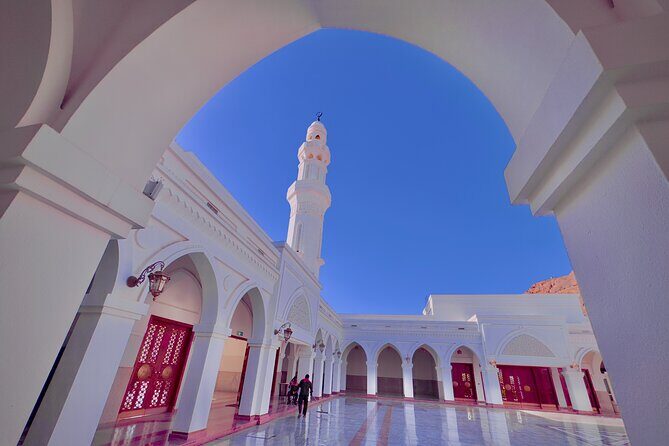
- Uhud and the martyrs in focus: Masjid Sayyid al-Shuhada and the 70 martyrs connected to the Battle of Uhud
- Qibla change spot: Masjid Al Qiblatayn, where the direction of Qibla was changed
- Prophet-linked wells: Bir Uthman, and Ghars Well with a specific link to the Prophet’s use
- Battle of the Trench locations: The Seven Mosques area, with context tied to that event
- Masjid Quba payoff: time to pray at Masjid Quba, with the tour explaining the reward connected to prayer
- Family-friendly guidance: clear explanations and patience when kids are along
How the Medina Unveiled tour really plays out (pickup, vehicle, and pacing)
This is a 3 hours 15 minutes private tour in Medina, designed for a group of up to 7 people. The big practical win is that you’re not trying to stitch together separate taxis or hunt down sites one by one. You meet at Al-Noor Mall (King Abdullah Branch Rd, Al’uyun, Madinah) and the tour returns you there.
You’ll ride in a clean, air-conditioned vehicle with WiFi onboard and bottled water. That matters more than it sounds in Medina heat: it helps keep the day moving, especially when your schedule includes multiple mosque-area stops close together.
You also get mobile ticket convenience, and the operator notes that timings are flexible. In plain terms: if you’re juggling arrival times or keeping the tour aligned with your day plan, you usually have some give.
Now the pacing. The itinerary includes several short stops (5–10 minutes) between longer blocks (like 30–40 minutes at major sites). For me, that’s great for seeing “more than you’d manage alone,” but it’s not a tour built for slow wandering or lingering photos at every corner. If you want deep, unhurried mosque time at every stop, you’ll need to supplement this tour with extra time on your own afterward.
You can also read our reviews of more private tours in Medina
Uhud sites: Mosque of Shield and Masjid Sayyid al-Shuhada
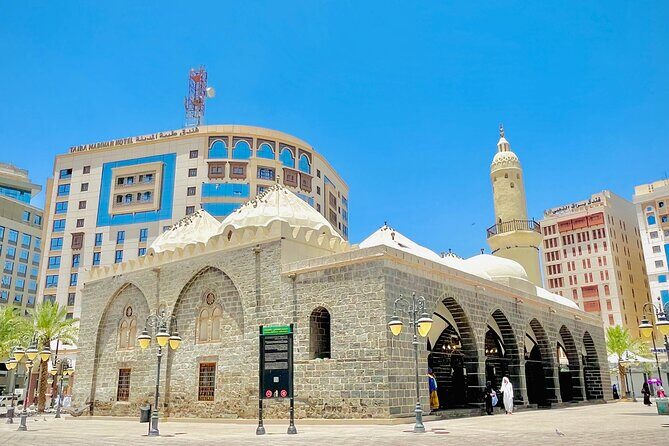
The route starts by steering you through places connected to the Battle of Uhud. First up is the Mosque of Shield, explained as being related to Uhud. Even when the stop is brief, it’s a helpful “set the scene” moment because it frames what you’re about to see next.
Then you hit Masjid Sayyid al-Shuhada, where the Battle of Uhud occurred. You get about 30 minutes here, and admission is included. The standout part of this stop is the focus on the graveyard of the 70 martyrs from that battle. If you care about Islamic history that isn’t just names on a page, this is the sort of place where the story becomes physical.
Practical tip: this is a mosque setting, so expect rules and respectful behavior. Since the itinerary includes multiple mosque visits, wear comfortable shoes. Also, if you sit toward the front of the vehicle, you’ll generally hear the guide better during short transfers—one guest flagged sound issues from the back of the SUV, and it’s a fair consideration.
Bir Uthman and the story of a well
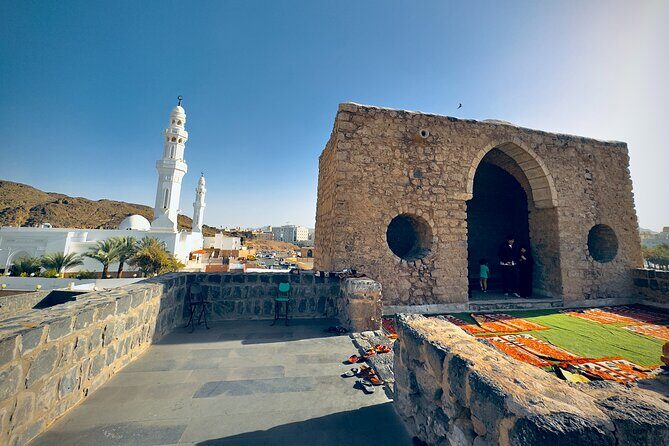
Next is Bir Uthman—the Garden of Othman Bin Affan and the Mosque of Othman Bin Affan. This is a short 5-minute stop, and admission is free.
Why I like this part of the tour: wells and water access show up in early Islamic life in a concrete way. You don’t need to be a scholar to appreciate it. The guide explains the history of the Well, so you can connect a simple location to the practical survival and community value it carried in its time.
Because the stop is short, it’s not meant to be a long photo walk. It’s more like a “you’re here for a reason” moment—then back to the vehicle.
Masjid Al Qiblatayn: seeing the Qibla change location
After Bir Uthman, you’ll visit Masjid Al Qiblatayn. This stop is around 20 minutes, with admission included.
This is one of the most meaningful historical sites on the itinerary because it marks a specific religious change: the place where the direction of Qibla was changed. The value here is clarity. If you’ve ever heard the story of the Qibla change but felt it was floating in theory, this stop anchors it to a real location.
For your visit, keep your expectations realistic: it’s a guided stop, not a self-guided museum. You’re there to understand what happened and why the place matters, then move on.
Ghars Well: a quick stop with a direct Prophet connection
Then comes Ghars Well, a 5-minute visit with admission included. The tour frames it as a well that Prophet Muhammad specified for himself.
Short stops can feel rushed in some tours, but Ghars Well works because it’s not a long “wandering” location. It’s a location with a focused message. Even if you spend only a few minutes there, you’ll likely leave with a clearer picture of how water sources were tied to everyday devotion and practice.
Islamic University of Madinah: modern learning in the middle of old stories
One of the smarter moments on the route is the Islamic University of Madinah stop (about 10 minutes, admission included). The itinerary treats the university as a well-known place for learning, and it adds contrast.
You’re not only traveling through “what happened then.” You’re also seeing that Medina is still a center of study now. Even if you’re not touring classrooms, being driven past and briefly oriented can help you understand why people keep returning to this city.
This stop also gives your legs a small break between longer mosque visits.
Al Masjid an Nabawi: Holy Mosque time for explanations (and what’s not included)
Next is Al Masjid an Nabawi, with about 40 minutes on the schedule. Admission is not included, and the tour notes that for non-Muslims, the visit includes explanations.
For me, this is where you have to manage expectations. A 40-minute stop inside one of the most visited religious sites in the world is not enough to “do everything.” The point here is orientation and context—hearing how the guide frames the significance—then moving on.
Also, because admission is not included, you may need to handle entry requirements separately. If you’re traveling as a non-Muslim, this part of the experience is designed with you in mind through explanations rather than assuming you’ll know what you’re seeing.
Sound matters here too. If you’re sensitive to audio clarity, try to position yourself where you can hear well during transfers and brief discussions. One guest suggested a head-worn microphone for clearer listening from the back of the SUV, and that’s exactly what you’d want in a crowded setting where guide audio can get swallowed.
The Seven Mosques: Battle of the Trench on the map
After Nabawi, you head to The Seven Mosques, connected to the Battle of the Trench. This stop runs about 30 minutes, and admission is included.
This part of the itinerary does something important: it connects religious geography with historical events. Instead of treating mosques as isolated landmarks, you learn why multiple sites are linked together by the Trench battle.
If you like stories where the city layout matters, this is one of the best segments. You leave with a mental map: not just “I saw a mosque,” but “this area ties back to a turning point.”
Masjid Quba: prayer time with a specific reward
Then it’s Masjid Quba. You’ll have about 30 minutes, with admission included.
The tour explains that the reward for praying in Masjid Quba is one Umrah, and you’re given time to pray here. After prayer time, you’ll get information about the mosque and also a well in the courtyard area.
This is the stop where the schedule feels most “worth it.” You’re not only learning; you’re also doing. Even if you’re not planning for a long sit-down, that structured prayer time gives the tour a spiritual element, not just a sightseeing loop.
Practical nudge: treat this as your moment for stillness. If you want to remember anything from the tour, remember Quba—then let the rest of the route feel like context around it.
Salman Al Farsi Farm and Valley of Aqeeq: garden and reflection
Two shorter closing stops round out the day.
First, Salman Al Farsi Farm (about 10 minutes, admission included). It’s described as a garden associated with Salman Al Farsi. The value here is lighter than the battle sites. It’s a calmer pace and a change of mood after the intensity of Uhud/Trench context.
Then comes Valley of Aqeeq, with about 5 minutes reserved for explanation. The tour frames it as a place where the Prophet came and prayed. This is not long enough to become a full visit, but short is sometimes perfect for meaning: you get the why, then you’re free to keep exploring on your own if the area draws you.
Price and value: $160 for up to 7 is the real question
The tour costs $160 per group (up to 7 people). That’s the key pricing detail, because private tours can feel expensive if you compare only per person.
Here’s the practical math:
- If you have fewer than 7 people, you’re paying more per person.
- If you fill close to 7, it becomes far more reasonable, because the fixed costs (car, guide, route time) are spread out.
What makes the price feel more justified is that multiple stops have admission included. Admission tickets are included at several major locations like Masjid Sayyid al-Shuhada, Masjid Al Qiblatayn, Ghars Well, Islamic University of Madinah, The Seven Mosques, Masjid Quba, and Salman Al Farsi Farm. Bir Uthman is explicitly free. The one major exception called out is Al Masjid an Nabawi, where admission is not included.
So you’re not paying for “just driving.” You’re mostly paying for access plus a guided explanation across a dense cluster of sites. If you prefer self-guided touring and you’re comfortable handling entry and navigation yourself, you might decide a taxi and your own maps are enough. But if you want a single coherent route and a guide to connect the dots, the value is easier to see.
Also: the tour includes bottled water, WiFi, and private transportation. Those are small things, but they reduce friction.
Who this tour is best for (and who may want a different plan)
This tour is a strong fit if you want:
- a structured overview of Medina’s early Islamic sites tied to Uhud, the Trench, and key religious locations
- a guide who can explain what you’re looking at without turning it into a lecture
- a family or mixed-age group that still wants a plan, not chaos
It may feel less ideal if you want:
- long hours inside one site with minimal moving around
- full Nabawi mosque time for your own exploration (this tour focuses on explanations and routing, not an all-day mosque experience)
- a tour built around slow walking and spontaneous detours
Tips to make it smoother on the day
- Sit where you can hear. If you’re in the back of the vehicle, guide audio may be harder to catch during transfers.
- Use your bathroom break timing wisely. The tour does not list a restroom on board, so plan around that.
- Bring a light layer. Mosques can feel cool at times, and you’ll be transitioning in and out.
- Treat Masjid Quba as your “real break.” That’s the stop where prayer time gives you something more than photos.
- Keep your phone charged. You’ll have WiFi on board, but you may still use your own map and notes.
Should you book Medina Unveiled Private Tour?
I’d book this if you’re the type of traveler who likes your history tied to exact places, and you want to cover a lot in a short day without stressing over routes. The combination of Uhud-linked stops, the Qibla change site, and the prayer time at Masjid Quba gives the tour a satisfying balance of story + action.
If you’re already spending a full day at Al Masjid an Nabawi on your own and you want minimal extras, you might find this tour shorter than you expected for the price. But if you want a guided “map in your head” after one morning or afternoon, this private format makes sense—especially when your group can come close to the 7-person cap.
FAQ
FAQ
How long is the Medina Unveiled private tour?
It’s approximately 3 hours and 15 minutes.
How many people are in a group?
It’s a private tour for your group, with up to 7 people.
Where do we meet, and where do we end?
You meet at Al-Noor Mall (King Abdullah Branch Rd, Al’uyun, Madinah 42331) and the tour ends back at the same meeting point.
Is pickup included?
Pickup is offered.
Are there admission tickets included?
Admission is included at several stops, while Al Masjid an Nabawi is listed as admission not included. Bir Uthman is free.
Does the tour include WiFi and bottled water?
Yes—there’s WiFi on board and bottled water is included.
Is there a restroom on board?
No, a restroom on board is not included.
What about meals?
Breakfast is not included, and no alcoholic beverages are included.
Can I cancel and get a full refund?
Yes. You can cancel up to 24 hours in advance for a full refund.