REVIEW · JEDDAH
Historical and Heritage Tour in Jeddah
Book on GetYourGuide →Operated by Taleed · Bookable on GetYourGuide
Street-level history in Jeddah, fast. What I really like about this 2-hour Old Town Al-Balad tour is that you don’t just pass by landmarks—you get pointed toward how people lived, traded, and prayed, from the merchant-house area to historic mosques. The other standout is the food-and-drink rhythm: Saudi coffee or tea with Hijazi Max mints, plus a food tasting in traditional café stops. One consideration: this is entirely on foot and out in the open air, so the heat and sun are real—plan for comfortable walking gear.
I also appreciate how flexible the guide experience can feel. In the real world, Howida is known for matching the tour to your interests and pace, while Hassan has handled schedule adjustments smoothly when time is tight (like a layover).
You’ll start at Jeddah Gate, where the wall dates back to a past century, and you’ll finish back at the same spot—handy for keeping your bearings. Just remember: entrance tickets, food like lunch/dinner, and transportation aren’t included, so you’ll want to treat this as a focused walk with tastes, not a full-day meal plan.
In This Review
- Key highlights to watch for
- Walking in Jeddah’s Al-Balad: starting at Jeddah Gate
- Merchant homes, old houses, and how you spot old wealth
- Nassif House and the museum stop: culture you can point to
- Mosques, prayer spaces, and the traditional market experience
- Artists’ Street and Street 97: crafts you can recognize
- The café rhythm: Saudi coffee, Hijazi Max mints, and food tasting
- Price and value: what $149 buys you in Jeddah
- What to bring (and what to skip) for a smooth walk
- Who this tour suits best
- Quick practical FAQ
- FAQ
- How long is the Jeddah historical and heritage tour?
- Where do we meet for the tour?
- Does the tour end at the same place?
- What languages are the guides speaking?
- What is included in the price?
- Are entrance tickets included for attractions like Nassif House or the museum?
- Is transportation included?
- Is the tour fully outdoors?
- Is it suitable for children?
- Can I cancel if my plans change?
- Should you book this heritage walking tour?
Key highlights to watch for
- Jeddah Gate start point that anchors the whole walk in context
- Nassif House + merchant-home streets where daily life and architecture meet
- Historic mosques and traditional market stops for a lived-in feel, not a photo-only route
- Saudi coffee/tea with Hijazi Max mints plus food tasting in traditional cafés
- Artists’ Street and Street 97 with hands-on crafts like Arabic-oil soap making and pottery
Walking in Jeddah’s Al-Balad: starting at Jeddah Gate
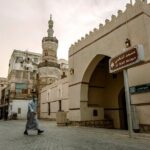
Starting at Jeddah Gate is smart because it gives you orientation instantly. Instead of wandering first and asking questions later, you begin where the city’s old boundary and story are visible. The guide discusses how the gate and wall connect to the wider region—so the place stops being just scenery and starts making sense.
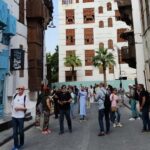
This tour also moves at a human speed. It’s built as an enjoyable walking experience through the heart of old Jeddah rather than a sprint to tick off stops. In practice, that means you’ll be able to pause, look closely at house details and street-level life, and actually absorb what you’re seeing—especially in the tight, character-filled lanes of Al-Balad.
And yes, it matters that it’s 2 hours. If you’re on a short visit, this is the kind of timing that fits without draining your day. If you’re staying longer, it’s a great first step: you learn how the neighborhoods work, then you can explore the rest on your own with better context.
You can also read our reviews of more historical tours in Jeddah


Merchant homes, old houses, and how you spot old wealth
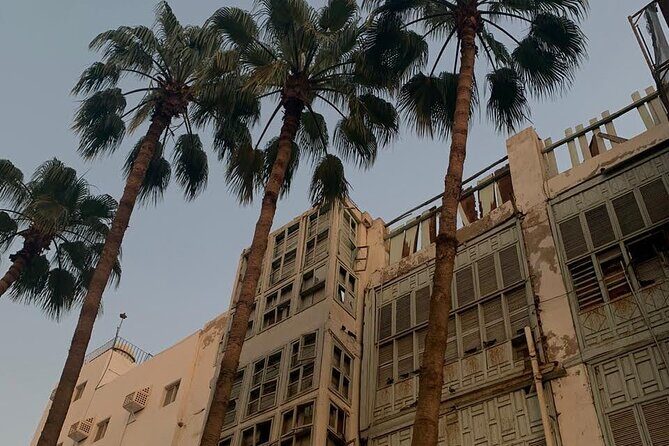
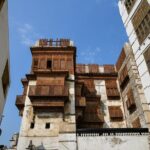
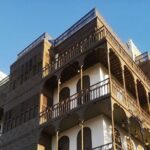
One of the best parts of the walk is getting beyond the generic idea of historic Jeddah and seeing the homes of the largest merchants and ancient families. You’ll move through the older house area where architecture and layout tell you who had resources and how families organized their space.
Look for cues like the way entrances and courtyards create privacy, and how the houses relate to the street. A place like this is where you start to understand that heritage isn’t just about grand buildings—it’s also about comfort, family life, and business routines woven into everyday design.
The tour also includes stops tied to the old town’s identity, including historic hotels like the old Jokhdar hotel. Even if you’re not going inside, the name alone helps you connect the modern visitor experience to older patterns of hospitality and movement through the city.
Nassif House and the museum stop: culture you can point to
Two specific stops anchor your understanding of “heritage” here. First is Nassif House. This kind of site is valuable because it translates architecture into story: rooms, structure, and layout help you picture how a household operated, hosted visitors, and lived within the rhythms of the city.
Second is the Museum of the first Saudi musician. This is the kind of stop that expands the tour beyond buildings. Instead of only focusing on trade and religion, you get a thread of cultural history—music—so you leave with a more complete idea of what shaped Saudi identity over time.
If you’re the type who likes context (how one part connects to another), you’ll probably enjoy this pairing. It turns the walk into a timeline, not just a list of stops.
Mosques, prayer spaces, and the traditional market experience
The tour includes historic mosques and a traditional market stop. These aren’t just “pass-by” locations. The guide explains the role these spaces played in daily life, and you get to see how community functions work on the street.
Markets are especially helpful here because you can use your senses. You’ll notice smells from nearby food and spice activity, you’ll hear bargaining and conversation, and you’ll see how shoppers and vendors interact. Even if you don’t buy much, the atmosphere teaches you how people moved through the neighborhood.
If you’re worried about feeling lost, don’t be. The guide’s job is to keep you oriented. When the route keeps changing, having someone explain why you’re going from one area to the next makes the experience feel logical instead of random.
Artists’ Street and Street 97: crafts you can recognize
One of the coolest segments is Artists’ Street and Street 97, where you’ll encounter local crafts. Soap making using Arabic oils, pottery, and other hands-on trades are part of what you might see along this stretch.
Two practical notes here. First, crafts can be visual and sensory, but they also take time. So if you’re the type who wants to watch closely, this portion gives you something real to look at beyond architecture.
Second, there’s a small scheduling advantage. The craft experience on these streets can be booked in advance about two days before. If you care about the process (not just the finished product), ask ahead about how to add that extra craft time and what the typical pricing looks like.
Also, this portion is a good reminder: this tour isn’t just about historic landmarks. It’s about present-day skills still tied to the city.





The café rhythm: Saudi coffee, Hijazi Max mints, and food tasting
Let’s talk drinks, because they’re part of why this tour works.
You’ll get Saudi coffee or tea served with Hijazi Max mints. That’s a nice touch because it’s not just a caffeine stop. It’s a cultural routine. The guide often uses the café moments to explain what you’re tasting and how the beverage fits into social life.
You’ll also have a food tasting during the walk. Food matters in heritage tours because it shows what’s normal in that place, not what’s staged for visitors. Even if you keep portions small, the variety helps you understand local flavors and habits.
One more thing: you’ll spend time in traditional cafés. That gives you short breaks from the sun and helps the walk feel more like a guided cultural afternoon than a strict sightseeing circuit.
Price and value: what $149 buys you in Jeddah
At $149 per person for a 2-hour walking tour, the value comes from three things you can’t easily replicate on your own.
1) A guide who can translate the city. Old houses and old streets look impressive, but the stories behind them are what make it click. The English/Arabic guiding is part of why this tour feels more than a self-guided map.
2) Access to the right stops in the right order. Beginning at Jeddah Gate and moving through merchant-home areas, historic mosques, and key sites like Nassif House keeps you from guessing.
3) Included tastings and hydration basics. You get bottled water, plus Saudi coffee or tea and a food tasting. Those included items turn the cost into something closer to a cultural “walk-and-sip” experience, not just a guide fee.
What’s not included matters too: entrance tickets and transportation are extra. So if you’re hoping for a tour where every ticket is covered, you’ll want to check what you’ll pay separately. If you’re okay with that and want maximum focus on heritage walking plus tastes, this price can feel fair for the time you save.
What to bring (and what to skip) for a smooth walk
This is entirely on foot in open air, so your comfort is part of the quality. Bring:
- Comfortable shoes (no slick soles)
- Sun hat, sunscreen, and sunglasses
- Water (even though bottled water is included)
- Comfortable clothes suited for hot weather
You also can’t bring everything. Drones aren’t allowed, and alcohol and drugs are prohibited by law. That’s not a “tour rule” so much as a local reality—plan accordingly.
If you’re someone who likes to take photos, remember the focus here is cultural and sensory, not a drone-heavy production. Stick with a phone or small camera and use the guide’s pacing to find good moments.
Who this tour suits best
This works well if you’re:
- interested in history, heritage, and local daily life
- traveling solo and want conversation and context
- a family with children old enough to handle a walking tour (it’s not suitable for children under 7 years)
- someone with a short window in Jeddah who still wants real Old Town context
If your idea of a vacation is avoiding heat and walking, then this may feel like hard work. The good news is the tour is only 2 hours, and you get café breaks along the way.
Quick practical FAQ
FAQ
How long is the Jeddah historical and heritage tour?
The tour lasts about 2 hours.
Where do we meet for the tour?
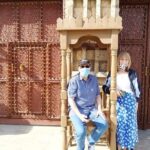
Meet at the seating area next to the old gate (Jeddah Gate).
Does the tour end at the same place?
Yes. It ends back at the meeting point near Jeddah Gate.
What languages are the guides speaking?
The guide provides English and Arabic.
What is included in the price?
Included are the tour guide (English and Arabic), Saudi coffee or tea with Hijazi Max mints, food tasting, and bottled water.
Are entrance tickets included for attractions like Nassif House or the museum?
No. Entrance tickets are not included.
Is transportation included?
No. Transportation is not included.
Is the tour fully outdoors?
Yes. It is entirely on foot in the open air, so bring sun protection and plan for walking in hot weather.
Is it suitable for children?
It is not suitable for children under 7 years.
Can I cancel if my plans change?
You can cancel up to 24 hours in advance for a full refund.
Should you book this heritage walking tour?
If you want a focused, guided walk through Jeddah’s Old Town with real context, tastes, and practical orientation, I think this is worth your time. The guides—especially Howida and Hassan—have a reputation for care, flexibility, and adjusting to your pace and interests, which matters a lot on a neighborhood walk.
Skip it only if you strongly dislike walking in open air or if you’re expecting ticket-free entrance to every site and a full meal plan. Otherwise, for one short afternoon in Jeddah, this is a smart way to understand the city beyond the surface.